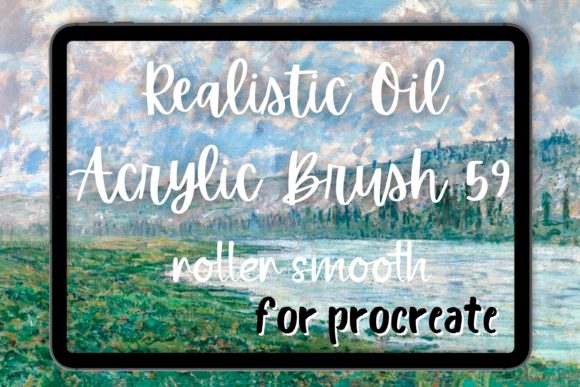
Mastering Texture and Flow with the Procreate Oil Brush 59 Smooth Roller
Digital painting has evolved significantly over the last decade, moving from flat vector graphics to hyper-realistic simulations of traditional media. For artists, illustrators, and designers working within the iPad ecosystem, the challenge is no longer just about replicating color, but capturing the physical sensation of the medium. This is where specialized tools like the Procreate Oil Brush 59 Smooth Roller become essential components of a professional workflow. Unlike standard digital brushes that often feel uniform or plastic, this tool is engineered to mimic the specific resistance and texture of real-life brush strokes on canvas.
Integrating the Procreate Oil Brush 59 Smooth Roller into your creative process requires more than just selecting it from a menu. It demands an understanding of how digital texture interacts with composition, lighting, and layer management. Whether you are creating impressionist landscapes, abstract expressionist pieces, or detailed product illustrations, this brush serves as a bridge between traditional tactile feedback and digital flexibility.
Understanding the Mechanics of Digital Impasto
The core value proposition of the Procreate Oil Brush 59 Smooth Roller lies in its ability to simulate the viscosity of oil paint. Traditional oil painting relies on the buildup of pigment, known as impasto, to create depth and light reflection. In a digital environment, achieving this effect without looking artificial is difficult. Many standard brushes apply color evenly, lacking the subtle irregularities that occur when bristles drag across woven canvas.
This specific brush addresses that gap by incorporating algorithmic variations that replicate the "roller" effect. When you swipe across the screen, the brush does not merely deposit color; it simulates the way paint spreads, thins, and catches on the texture of the surface. This is particularly useful for artists transitioning from physical media to digital platforms. The familiarity of the stroke behavior reduces the learning curve, allowing creators to focus on artistic intent rather than fighting against the software’s default smoothness.
For professionals who deliver work to clients accustomed to traditional aesthetics, such as publishing houses or gallery curators, the authenticity provided by this tool can be a deciding factor in project approval. It allows for the creation of painterly textures that hold up under close inspection, maintaining the illusion of hand-crafted art even when viewed at high resolutions.
Strategic Integration into Your Creative Workflow
To maximize the utility of the Procreate Oil Brush 59 Smooth Roller, it should be viewed as part of a broader toolkit rather than a standalone solution. Its effectiveness depends heavily on when and how it is introduced during the painting process. Here is how it fits into various stages of production:
Preparation and Layer Setup
Before applying the first stroke, preparation is key. The Procreate Oil Brush 59 Smooth Roller performs best when paired with a textured canvas background. Importing a high-resolution scan of linen or cotton canvas provides the necessary tooth for the brush to interact with. Without this underlying texture, the simulated bristle effects may appear flat. Additionally, organizing your layers logically ensures that you can experiment with bold strokes without compromising the structural integrity of your sketch.
- Base Layer: Use a flat, opaque brush to block in major shapes and colors.
- Texture Layer: Apply the canvas texture overlay set to "Multiply" or "Overlay" blend mode.
- Painting Layer: This is where the Procreate Oil Brush 59 Smooth Roller shines, allowing for expressive application over the prepared surface.
Execution and Building Depth
During the execution phase, the brush excels in creating mid-tones and highlights. Because it mimics the behavior of a roller or wide flat brush, it is ideal for covering large areas while maintaining organic variation. Artists can use it to blend colors directly on the canvas, similar to wet-on-wet techniques in traditional oil painting. This reduces the need for excessive blending tools and keeps the artwork looking fresh and spontaneous.
For those interested in impressionism or abstract painting, the brush’s ability to leave visible stroke marks is invaluable. These marks guide the viewer’s eye and add rhythm to the composition. By varying pressure and tilt, users can achieve everything from thin, translucent glazes to thick, opaque daubs. This versatility makes it suitable for both acrylic brush styles and heavier gouache brush applications, depending on the opacity settings adjusted in the brush studio.
Enhancing Specific Artistic Styles
The versatility of the Procreate Oil Brush 59 Smooth Roller extends across multiple genres. Its design principles align well with several prominent artistic movements and commercial needs.
Van Gogh-Inspired Techniques
Fans of post-impressionism often seek to replicate the swirling, dynamic energy found in the works of Vincent van Gogh. The Procreate Van Gogh aesthetic relies heavily on directional strokes that convey movement and emotion. The Smooth Roller variant allows for long, continuous lines that maintain consistency in width and texture, essential for creating those iconic sky and field patterns. When combined with a vibrant palette, this brush helps achieve the Van Gogh oil look without the mess and drying time of physical paints.
Commercial Illustration and Concept Art
In commercial contexts, speed and consistency are paramount. Concept artists and illustrators often need to produce mood pieces that convey atmosphere quickly. The smooth brush characteristic of this tool allows for rapid blocking of environments. Whether designing backgrounds for animation or creating cover art for books, the ability to lay down rich, textured color efficiently streamlines the production pipeline. It interacts seamlessly with other assets in a Procreate bundle, allowing artists to switch between detailing brushes and broad coverage tools without losing visual coherence.
Technical Considerations and Optimization
To ensure optimal performance, users must consider the technical aspects of their device and software settings. The complexity of simulating real-life brush strokes requires processing power. On older iPad models, using high-resolution canvases with complex brushes may lead to latency. To mitigate this, consider the following adjustments:
- Streamline Settings: Adjust the streamline feature in Procreate to stabilize strokes if you experience jitter, though the natural texture of the brush often masks minor imperfections.
- Brush Size Limits: Avoid setting the brush size to maximum on extremely large canvases, as this can strain the rendering engine. Instead, build up coverage with multiple passes.
- Customization: Dive into the Brush Studio to tweak the grain source. While the default settings are optimized for realism, personalizing the grain intensity can help match specific project requirements, such as a rougher look for abstract painting or a finer finish for portraiture.
Furthermore, understanding how this brush interacts with blend modes is crucial. Using it on layers set to "Color Dodge" or "Soft Light" can create luminous effects that mimic the refractive quality of oil paint. Experimentation with these settings reveals new possibilities for lighting and atmosphere, enhancing the overall depth of the piece.
Long-Term Value and Skill Development
Investing in high-quality digital tools like the Procreate Oil Brush 59 Smooth Roller contributes to long-term skill development. By providing a realistic feedback loop, it helps artists refine their understanding of light, shadow, and form. The constraints and behaviors of the brush encourage deliberate decision-making, fostering a discipline similar to traditional painting.
For educators and mentors, introducing students to such tools can bridge the gap between classical training and modern digital practice. It demonstrates that digital art is not merely about undo buttons and filters, but about mastering a virtual medium with its own physics and characteristics. As the industry continues to value hybrid skills, proficiency in tools that emulate traditional media becomes increasingly marketable.
Ultimately, the Procreate Oil Brush 59 Smooth Roller is more than a preset; it is a facilitator of artistic expression. By integrating it thoughtfully into your workflow, respecting its mechanical nuances, and combining it with solid foundational practices, you can elevate the quality and authenticity of your digital paintings. Whether you are a hobbyist exploring impressionism or a professional delivering client-ready illustrations, this tool offers the tactile richness needed to bring your vision to life.